We are proud to announce that mySeniorCareHub has been awarded
“Best Medical Mobile App with Wearable Devices 2026” in 2026.
Discover why experts are calling us the
“Proactive Digital Guardian” for modern families.
We’ve joined the elite ranks of industry leaders as a premier choice for digital health.
“What truly sets mySeniorCareHub apart is its ability to humanize data.
It isn’t just a series of charts; it’s a proactive digital guardian.
They don’t just track data; but translate vitals into actionable wellness scores,
giving families real-world impact and true peace of mind.”
— Your Opinion Corner
What Sets mySeniorCareHub Apart From The Rest?
AI Health Insights
With Kiara one can checks symptoms, drug interactions and the
voice-activated assistant help log data hands-free.
360° Safety
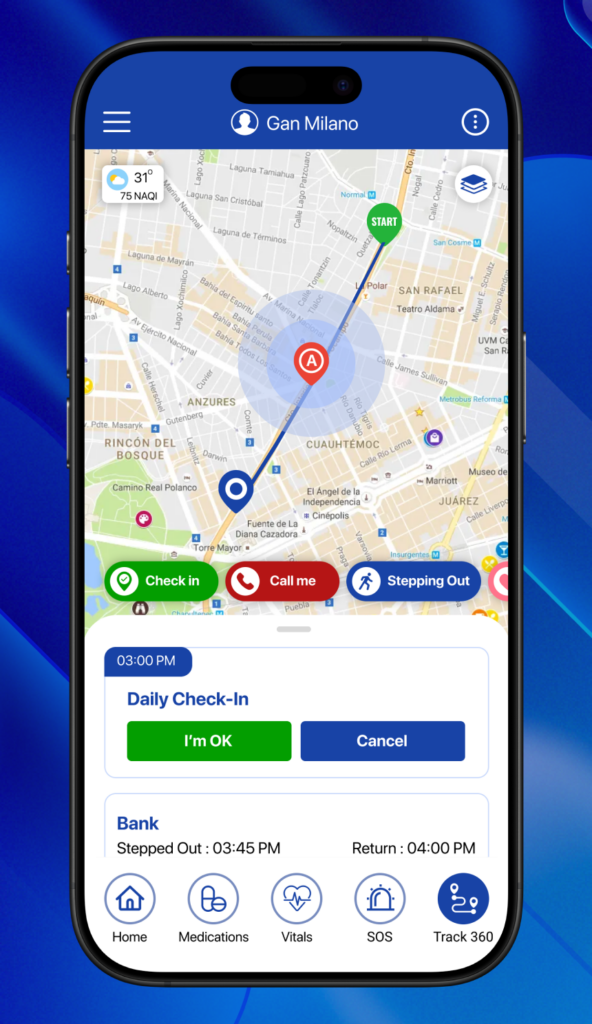
Real-time GPS, automatic fall detection alerts, and geofencing
for immediate crisis response with 24/7/365 Support
Vital Integration
Monitors BP, O2, and Heart Rate to create your own personalized AI Wellness Score.
Unified Dashboard
One hub for the whole family with up to 4 devices support with data sync
across iOS and Android seamlessly.
Haptic Feedback
Ability to add medication via Camera/photo library and easy to add
prescriptions without typing with just voice commands.
Award-Winning Medical Alert Devices
Choose a Device That Keeps Your Loved One Safe
Trusted by families and recognized in 2026 as the
Best Medical Mobile App with Wearable Devices 2026.
Built for emergencies, independence, and peace of mind.
SafeLynk Watch | Gold Family Membership | Mobile App | 24×7 SOS Emergency Dispatch
mySeniorCareHub, a leader in digital health solutions, is proud to announce it has received the 2026 Best Medical Mobile App with Wearable Devices award from Your Opinion Corner. This accolade cements the platform’s status as the best mobile app for families seeking integrated, high-tech medical safety and health monitoring for their loved ones.
Your Opinion Corner, a respected authority in consumer technology, recognized mySeniorCareHub for its revolutionary approach to senior safety. This award distinguishes the app among global industry leaders for its seamless blend of AI and wearable technology.
“We are incredibly proud to receive this recognition,” said Anish Desai of mySeniorCareHub. “Our goal was to create an app that goes beyond basic tracking to provide a vital, life-saving connection between seniors and their families. This award validates our team’s dedication to solving the complex challenges of remote elder care.”
Award-Winning Features for Proactive Senior Care:
The evaluation focused on functionality, user experience, and real-world impact. mySeniorCareHub stood out through several core innovations:
AI-Powered Health Insights with Kiara: An intuitive AI assistant that allows seniors to check drug interactions and log symptoms hands-free via voice commands.
360° Safety Monitoring: Real-time GPS tracking, advanced fall detection, and customizable geofencing for immediate emergency response.
Integrated Vital Sign Tracking: App monitors blood pressure, oxygen levels, and heart rate, synthesizing data into an AI Wellness Score.
Unified Family Dashboard: A secure interface on both iOS and Android that allows multiple family members to collaborate on care in real-time.
As the demand for Remote Patient Monitoring (RPM) grows, mySeniorCareHub remains at the forefront, empowering seniors to maintain independence while providing families with unparalleled peace of mind.
About mySeniorCareHub:
mySeniorCareHub is a leading provider of mobile health solutions. Their award-winning app offers a comprehensive suite of features for health monitoring and emergency response. For more information, visit our about us page
About Your Opinion Corner:
Your Opinion Corner is a prominent platform providing unbiased reviews. Their niche is in consumer technology and lifestyle services, helping consumers navigate the digital landscape with confidence.
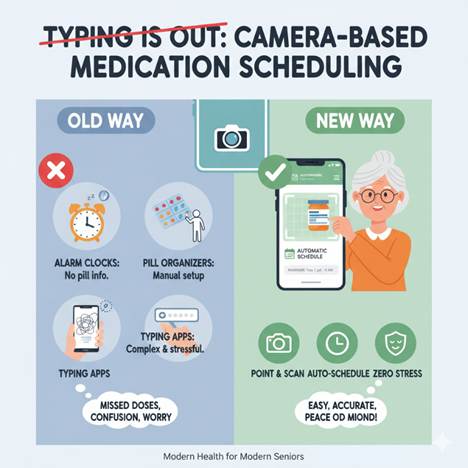
Taking medicines on time is not just important — it’s life-saving. But let’s be honest: typing reminders into a phone or setting up complex apps can feel like a chore, especially for seniors who don’t want another “tech headache.” Enter the game-changer: camera-based medication scheduling.
This simple yet smart system helps seniors manage their pills with almost no typing, no complicated setups, and zero stress. Let’s break it down in a fun, friendly way.
Why Traditional Medication Reminders Fail
Most seniors rely on:
Alarm clocks – They beep, but they don’t tell which pill to take.
Pill organizers – Helpful, but someone still has to set them up correctly.
Typing-based apps – Too many steps, passwords, and confusing menus.
The result? Missed doses, double doses, and unnecessary worry.
The Modern Twist: Camera-Based Scheduling
Imagine this: instead of typing every detail, you just hold your pill bottle up to your phone’s camera. The app scans the label, reads the prescription, and automatically creates a schedule.
No typing. No confusion. Just point, snap, and done.
Key Benefits of Camera-Based Medication Scheduling
Typing-free convenience – Ideal for seniors who aren’t comfortable with smartphones.
Visual reminders – Some apps show pill images, making it easier to identify the right medicine.
Caregiver sync – Family or caregivers can also receive alerts.
Voice and camera integration – Seniors can confirm intake by showing the pill to the camera.
How It Works: Step-by-Step
Scan the bottle → The app extracts medicine name, dosage, and timing.
Schedule auto-sets → The app builds reminders based on prescription info.
Get reminders → Alerts with pill names, images, and instructions.
Track intake → Seniors can tap “taken” or show the pill via camera for confirmation.
Caregiver notifications → Family gets a ping if a dose is missed.
Comparison at a Glance
Feature
Traditional Apps (Typing)
Camera-Based Scheduling
Setup time
Long (manual entry)
Quick (snap and go)
Ease of use
Confusing for many
Very simple
Error risk
High (typos, wrong dose)
Low (automated scan)
Visual confirmation
Rare
Common
Caregiver involvement
Limited
Built-in sharing
Senior-friendly
Moderate
Excellent
Real-Life Impact: Stories that Inspire
Mrs. Rao, 72: “I used to forget my evening pill. Now my phone just shows me the pill picture at 7 pm. I can’t miss it!”
Mr. Mehta, 80: “Typing on my phone was impossible. Scanning is so easy — I feel more independent.”
Why Seniors Love It
No tiny buttons to press
Less reliance on memory
More confidence in medication safety
Peace of mind for both seniors and caregivers
Future of Medication Management
With AI-powered scanning, voice assistants, and smart pillboxes, camera-based scheduling is only getting better. Soon, seniors may simply show the camera their pills once a week and let the system take care of the rest.
Medication should heal, not hassle. With camera-based medication scheduling, seniors can say goodbye to typing struggles and hello to a safer, stress-free routine. It’s simple, smart, and designed with seniors in mind.
For today’s modern senior, the camera isn’t just for selfies — it’s for health and independence.
Caring for someone with dementia is more than remembering pills or checking locations. It’s about keeping them safe, supported, and feeling loved. That’s where the right app makes all the difference.
In 2026, mySeniorCareHub stands out as the best dementia app for seniors and caregivers alike, combining medication reminders, live location tracking, emergency SOS, and routine check-ins into one simple, friendly platform.
Let’s see why this all-in-one tool is changing the way families handle dementia care.
Why Dementia Apps Matter in 2026 – Best Dementia App for Seniors
Dementia care is often unpredictable. One day, everything feels fine; the next, your loved one might wander outside or forget critical medication.
A good dementia app helps caregivers stay a step ahead, offering tools that bring structure and safety without feeling intrusive.
Today’s families want more than reminders. They want peace of mind, connection, and real support. That’s exactly what mySeniorCareHub delivers.
Why Traditional Care Methods Fall Short in 2026?
Medication Gap: Mismanaged doses lead to health spikes and emergency room visits.
Wandering Risk: Traditional GPS trackers are often bulky, expensive, or easily forgotten at home.
Caregiver Burnout: Managing a calendar, location, and health logs across multiple apps creates “digital fatigue.
mySeniorCareHub: All-in-One Dementia Care Companion
App Features
How It Helps Seniors & Caregivers
Medication Reminders
Sends clear, easy-to-read alerts to seniors and caregivers so no dose is missed.
Real-Time Location Tracking
Let caregivers see where their loved one is anytime, preventing wandering risks.
Emergency SOS Button
Seniors can send instant alerts to caregivers in case of confusion, falls, or other emergencies.
Routine Check-Ins
Schedule friendly prompts for hydration, meals, short walks, or mental exercises
Shared Calendar & Notes
Helps families coordinate appointments, visits, and activities seamlessly.
Your All-In-One Dementia Care Companion App
Don’t Wait For A Crisis To Happen, Secure Your Loved Ones Now
Frequently Asked Questions: Dementia app for seniors
Q. How can an app actually help someone with advancing dementia?
A. While technology can’t replace human care, it provides a safety net. For seniors, it offers simplified prompts that encourage independence.
For caregivers, it reduces “hyper-vigilance” by providing automated alerts for medications and location, allowing you to focus on quality time rather than constant monitoring.
Q. Is the app easy enough for a senior with memory loss to use?
A. Yes. Unlike standard health apps, mySeniorCareHub features an “interface-first” design. This means extra-large buttons, high-contrast colors for better visibility, and a simplified layout that eliminates confusing menus.
The goal is to make the SOS and reminder features accessible even during moments of mild confusion.
Q. What happens if my loved one forgets their phone or it loses battery?
A. Our mySeniorCareHub app includes a Low Battery Alert sent directly to the caregiver’s device.
We always recommend that the app be part of a broader safety plan, such as keeping the phone in a dedicated “exit-door” pouch or using a wearable lanyard, to ensure it stays with the senior when they leave the house.
Q. Can multiple family members track one senior at the same time?
A. Absolutely. Caregiving is a team effort. You can sync mySeniorCareHub app across 4 premium family accounts (devices) under one roof, so that siblings, spouses, or professional aides all receive the same real-time updates, medication logs, and SOS alerts.
Q. How does the “Safe Zone” (Geofencing) feature work?
A. You can draw a virtual perimeter on a map like a two-block radius around their home. If the senior’s device crosses that boundary, mySeniorCareHub app sends an instant notification to the caregiver.
This is a critical tool for managing “wandering” behaviors common in middle-stage dementia.
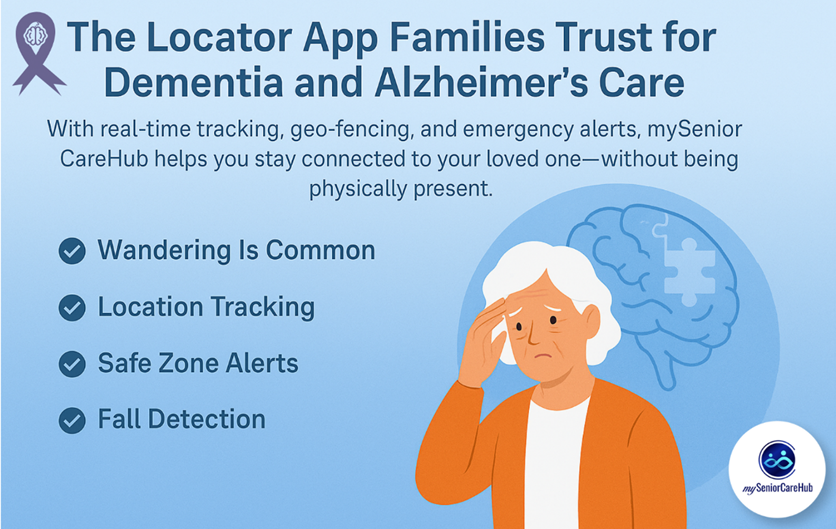
Caring for someone with dementia or Alzheimer’s is more than just memory support. These conditions often affect orientation, decision-making, and even the ability to recognize familiar surroundings. One of the most pressing concerns for families is wandering a common and dangerous behavior associated with cognitive decline.
Did you know? 60% of people with dementia will wander at least once, and many do so repeatedly. These aren’t casual walks—they can lead to accidents, confusion, dehydration, or getting lost in unfamiliar or even busy areas.
mySeniorCareHub is built specifically for elderly safety, dementia care, and peace of mind for caregivers. With senior-friendly features and a caregiver dashboard, it’s one of the most reliable apps for tracking, protecting, and staying connected with loved ones who are living with memory disorders.
Create safe zones such as home, nearby parks, or a neighbor’s house. Get instant alerts if your parent wanders outside these areas—so you can act fast.
💡 Tip: Set up multiple zones that reflect your parent’s daily routine to avoid false alarms and reduce stress.
If your loved one gets confused or lost, a single tap sends an emergency alert with their live location to you and other caregivers.
🧍♂️ Fall Detection with GPS
Falls are dangerous, especially when they occur during a wandering episode. mySeniorCareHub detects sudden falls and shares the precise location for faster intervention.
📊 Caregiver Dashboard for Family Monitoring
Whether you’re in the same house or abroad, you can monitor their location, vitals, and medication reminders all in one dashboard.
Wandering doesn’t mean they’ve lost control it means they need support. And support should never feel like surveillance. mySeniorCareHub respects the autonomy of seniors while empowering caregivers with vital information and alerts.
Its clean design, voice-enabled features, and simple interface make it suitable even for seniors unfamiliar with technology.
More Than Just a Locator. It’s a Complete Care Solution
In addition to GPS location tracking, the app includes:
mySeniorCareHub: Best App for Parients Monitoring and Taking Care of Elderly Parents
App for Parents Monitoring and tracking their location for Safety is nessacery for everyone.
As our parents age, our roles reverse.
Suddenly, we’re the ones who check if they’ve taken their meds…
If they reached home safely from the evening walk.
If they remembered to eat lunch.
If they’re okay after that faint headache they mentioned yesterday.
But with jobs, kids, cities, and sometimes continents between us, how do we do it all?
That’s where mySeniorCareHubcomes in. This isn’t just an app. It’s your way of being there, even when life doesn’t allow you to. App for Monitoring and Taking Care of Elderly Parents
Why This App Is a Lifesaver for Modern Families
Unlike generic health trackers, mySeniorCareHub is built specifically for elder care. It thinks like a caregiver. It feels like a family member.
Let’s break down what it offers—and why each feature can make a real difference:
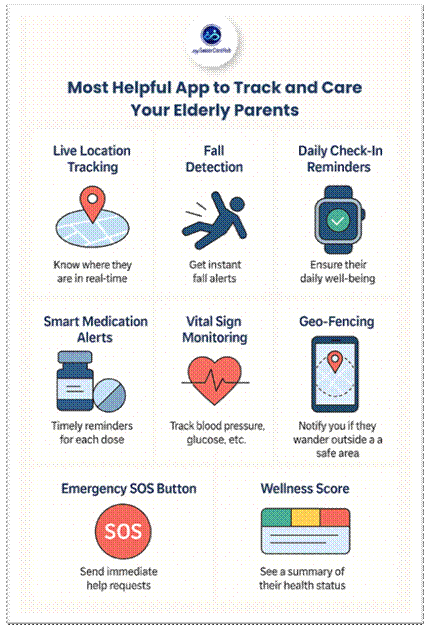
A single tap alerts family and emergency contacts—with exact location. Fast, reliable, and possibly lifesaving.
Wellness Score
A smart visual summary of their current health—colour-coded and easy to understand for everyone.
Story from Real Life: How the App Turned into a Lifeline
Ritika, a marketing manager in Bangalore, installed MySeniorCareHub for her father, who had recently started forgetting his medications. One evening, he had a minor fall while feeding the dog. The fall detection features immediately alerted her, and she coordinated with a neighbour to reach him.
“It wasn’t serious, thank god,” Ritika says. “But I wasn’t even in the same city. Without the app, I wouldn’t have known for hours. That changed everything for me.”
Built for Them. Managed by You.
Worried that your parents won’t be able to use it?
Don’t be. MySeniorCareHub was designed with seniors in mind:
Large, readable fonts
Minimal steps to complete tasks
Voice assistance for ease
Remote control: You can set up everything from your phone
They don’t need to be tech-savvy. You handle the setup. They just tap, click, and live freely.
Not only for emergencies!
Yes, this app shines during emergencies. But the real magic is in the everyday things it helps with:
You’ll know if your dad skipped his morning walk.
You’ll get a summary of your mom’s weekly blood pressure trends.
You’ll be able to sleep at night knowing they pressed the “I’m okay” button before bed.
Elders prone to falls or chronic health conditions
Anyone who wants a safety net for their loved ones
Being Present, Even from a Distance
We can’t pause our lives. But we also can’t ignore the growing needs of our ageing parents.
MySeniorCareHub lets you stay connected, informed, and prepared—without being intrusive or overbearing. Because care doesn’t always need to be loud or visible. Sometimes, it just needs to be consistent.
It’s time to take a step toward smarter elder care. Because love deserves tech that understands it.
When You Can’t Be There All the Time, Smart Check-Ins Can Help You Care Without Constant Calls
“Is she Okay ?” “Did she take her meds?” “Did she wake up feeling okay today?”
These questions run through my mind every single day. But like many people in their 20s or 30s, I also work full-time, live in a different city, and can’t keep calling my grandmother every few hours to check in.
Every missed call from her makes my heart race. Every unanswered text feels like a warning sign.
But here’s the truth: she’s not neglecting me—she’s just tired, busy, or sometimes she doesn’t feel like talking. And I’m not a bad caregiver. I just can’t be everywhere at once. That’s why I turned to smart daily check-ins—not to replace care, but to support it.
The Silent Struggles of Long-Distance Caregivers
Caring for elderly loved one remotely comes with its emotional weight. You experience anxiety when they don’t respond, guilt when you’re unavailable, and helplessness when something unexpected goes wrong.
Especially with seniors who live alone or are recovering from illness, the early signs of trouble are subtle:
And many times, these warning signs go unnoticed until they become emergencies.
A Personal Story: The Missed Call That Wasn’t Just a Missed Call
My grandmother didn’t answer her phone or reply to my regular morning message two months ago. It was a busy Monday morning at work, but something didn’t feel right.
I asked my neighbour to check in. She found my grandmother lying down, dizzy and weak. She skipped breakfast, forgot her morning meds, and didn’t drink water because she felt “a little off”.
That “little off” was the beginning of a drop in her blood pressure—something that could’ve turned dangerous.
That incident stayed with me. I realised that care needs to be proactive, not reactive.
How Smart Check-Ins Make the Invisible, Visible
That’s when mySeniorCareHub entered my life, a tool that helps bridge this gap without making seniors feel like they’re being watched constantly.
Gives an overview of daily well-being without overwhelming the caregiver
Instead of guessing how she’s doing, I now get a simple, colour-coded wellness update. If something’s off, I know it—without waiting for a call that might never come.
The Medical Importance of Daily Monitoring
Elderly people—especially those living alone—are at higher risk of dehydration, hypotension (low BP), and hypoglycaemia (low blood sugar). These are conditions that don’t always present with loud symptoms. The first sign is often just:
A skipped meal
Feeling too tired to move
A missed check-in
But these “small” moments are medically significant.
Symptom
What It Might Indicate
Missed meal + dizziness
Early signs of low blood sugar or BP
No check-in + excessive sleep
Fatigue, depression, or medication side effects
Unusual mood during check-in
Cognitive decline, isolation, or infection onset
Catching these early gives us time to intervene—to send help, adjust a routine, or simply check in at the right moment.
You Don’t Have to Call 5 Times a Day to Be a Good Caregiver
There’s a lot of guilt tied to caregiving from a distance. We worry that using tech means we’re replacing human connection. But in reality, it’s the opposite.
Technology like mySeniorCareHub doesn’t replace love—it supports it. It gives you the peace of mind that someone is watching over your loved one, even when you’re caught in meetings, stuck in traffic, or on another continent.
Because sometimes, caring doesn’t mean constantly calling. It means setting up systems that catch the whispers before they become screams.
Final Thought
I still talk to my grandmother every evening. But now, our conversations are less about “How are your ?” and more about “How was the sambar today?” Because I already know she’s okay. The app told me.
If you’re a working caregiver, you’re not failing your loved one. You’re juggling a lot. Let smart check-ins assist you, so you can show up with more calm, more confidence, and more love.
As people age, managing multiple health conditions becomes a daily routine, diabetes, blood pressure, cholesterol, arthritis, the list goes on. It’s easy to lose track of pills, especially when memory starts to slip or when the day is simply too overwhelming.
But here’s the scary part: Missing even a single dose of blood pressure medication can spike BP levels within hours, increasing the risk of stroke, heart attack, and kidney damage.
A study from the Journal of Hypertension indicates that elderly patients who miss their BP medication just twice a week have double the risk of cardiovascular and neural complications. However, most of these cases are preventable, with just a little awareness. BP Medication Reminder App can help.
It’s not neglect; it’s human. But the consequences? Serious.
Case 1: A 72-year-old woman skipped her meds for three days, thinking her blood pressure was under control. She fainted while walking and was hospitalized for 48 hours.
Case 2: A diabetic senior with high BP mixed up his pill schedule and doubled one dose and and missed the next. The imbalance led to dizziness and a fall.
In both cases, early alerts could have avoided the panic.
Why Skipping BP Medication Is So Dangerous
High blood pressure (hypertension) is often called the “silent killer”—and for good reason. Most people won’t feel any different when their blood pressure shoots up, but inside, their organs are under pressure. That’s why sticking to prescribed medication is non-negotiable, especially for the elderly.
According to the World Health Organization (WHO), over 1.28 billion adults globally have hypertension, and less than half are being treated properly. Studies show that missing just two doses of BP medicine in a week can double the risk of heart attacks or strokes—and this risk increases with age.
When an elderly person skips their BP meds,
It can lead to hypertensive emergencies, sudden, severe increases in BP, which may result in:
Stroke
Heart attack
Kidney damage
Vision loss
Dizziness and falls, especially dangerous for seniors
What’s worse is that these effects often appear suddenly, without warning symptoms.
Notifies caregivers or family when a pill is skipped
Enables timely check-ins
Symptom Tracker
Log dizziness, fatigue, headaches
Flag early warning signs of BP issues
Wellness Score
Tracks vital health data and highlights changes
Prevents sudden spikes or drops from going unnoticed
Recording Vitals
Record your daily BP readings to keep track of health changes
Daily Record keeping of BP readings for doctor’s reference
Imagine getting a phone notification saying, “Mom missed her BP pill this morning. Please remind her.” That’s not over-controlling. That’s care in action.
Caring for aging parents while balancing work, family, and life can be challenging. You may not always be able to be there in person, but you can still show up in meaningful ways. With tools like mySeniorCareHub, you’re bridging the gap between love and responsibility.
You’re not just monitoring, you’re preventing, protecting, and prioritizing their health.
What You Can Do Today
Talk to your parents about the importance of medication adherence.
Set up reminders using mySeniorCareHub’s smart health features.
Stay connected with real-time updates on missed doses or symptoms.
Act early; in health, timing is crucial.
Final Thought
One missed pill can be silent, but your response doesn’t have to be. Let smart care step in before emergency care is needed. Start using mySeniorCareHub today. Because forgetting a pill shouldn’t mean risking a life.
Although taking care of elderly loved ones is a duty based on love, there is frequently a persistent undercurrent of anxiety, particularly when family members live far away.
The mind starts to stray to the worst-case scenarios after just one missed call and one unanswered text. What if clarity could be achieved with a tap to eliminate this uncertainty?
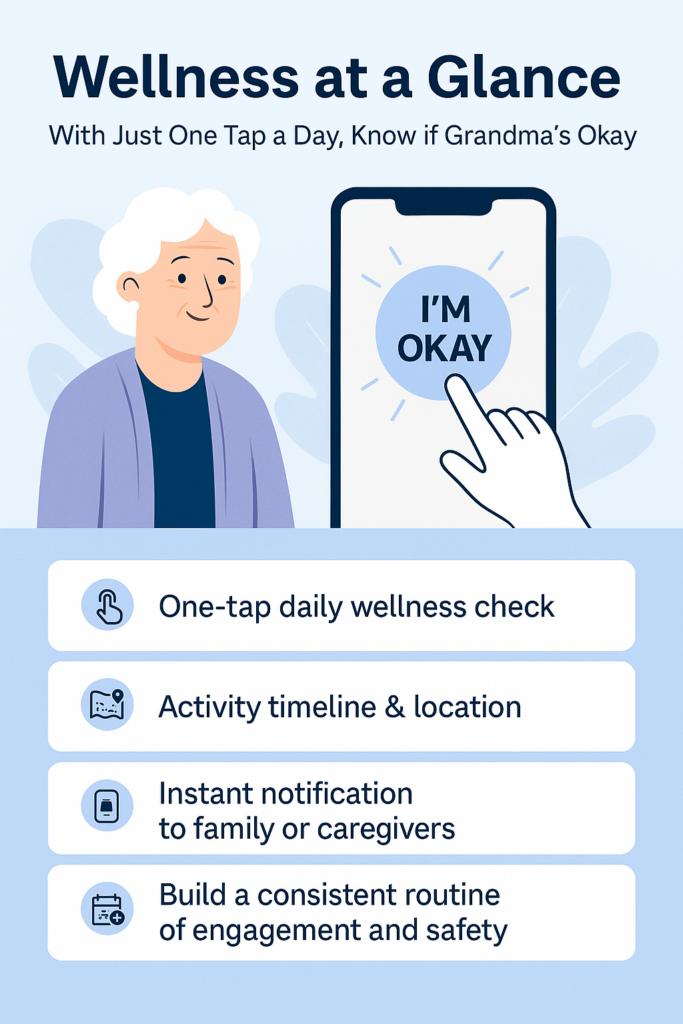
The one-tap daily wellness check feature on mySeniorCareHub promises to do just that. Not only is it a tool, but it’s also a silent companion that ensures your loved one is alright every day and assists you in acting before minor health issues become serious.
Small signs often precede major health events in the elderly. While traditional care depends on scheduled check-ups or visible symptoms, this feature bridges real-time insight and timely intervention.
Here’s how common medical issues can be detected early using this feature:
1. Stroke and TIA (Transient Ischemic Attack)
Warning Signs: sudden disorientation, weakness, and imbalance.
How the Feature Helps: Delayed or missed check-ins and reduced activity patterns may reflect early neurological symptoms.
2. Falls and Fractures
Warning Signs: Sudden inactivity or non-responsiveness.
How the Feature Helps: By identifying when a person hasn’t moved in hours, the activity timeline enables carers to take prompt action, potentially averting “long-lie” complications like hypothermia or pressure sores.
3. Urinary Tract Infections (UTIs)
Warning Signs: Confusion, fatigue, or unusual behaviour in seniors.
How the Feature Helps: Seniors may not report pain, but they might tap “not okay” without knowing why. Such responses offer subtle yet valuable clues.
4. Cardiac Problems
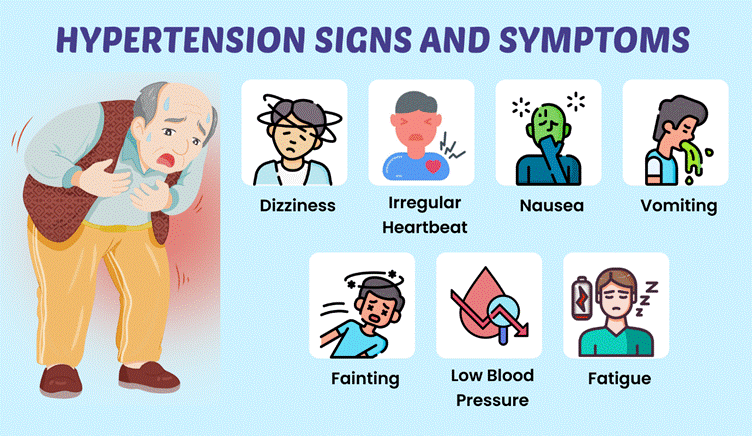
Warning Signs: Dizziness, shortness of breath, palpitations.
How the Feature Helps: Early fatigue or discomfort may lead to fewer movements or a change in check-in routine.
Understanding the Broader Benefits:
Aside from catching red flags, the feature supports overall wellness in multiple ways:
Promotes Routine and Stability
Seniors thrive on structure. A daily check-in becomes a self-care ritual and a mental reminder to assess their well-being.
Boosts Mental Health
Knowing that someone checks on them daily, even digitally, reduces feelings of isolation and loneliness.
Supports Cognitive Monitoring
Inconsistencies or delays in day-to-day interactions could indicate early cognitive changes, which could help monitor diseases like Parkinson’s or dementia.
Chronic diseases require consistent attention. This feature can be integrated into disease-specific care plans by tracking behavior trends that may indicate worsening health.
Condition
Daily Check-In Benefits
Diabetes
identifies signs of blood sugar fluctuations, such as irregular activity, fatigue, and missed meals.
Hypertension
Observes sudden inactivity, which could mean dizziness or early hypertensive symptoms
Arthritis
Flag mobility changes, helping to adjust therapy or pain management
Dementia
Tracks inconsistencies or missed check-ins, useful in early diagnosis and caregiver alerts
This approach fosters preventive healthcare rather than reactive treatment.
The Emotional Connection
This feature’s impact isn’t limited to clinical outcomes. It touches on something far more human: connection.
For Seniors:
Builds a sense of purpose and participation.
Encourages daily reflection on health.
Provides comfort in knowing someone is quietly watching out for them.
For Caregivers:
Offers peace of mind through timely alerts. Reduces stress and anxiety about sudden medical emergencies.
Enhances remote caregiving, especially for NRIs or families living in different cities.
Unlike generic health monitoring tools, mySeniorCareHub’s daily check-in is tailored for the elderly:
User-friendly design: Big buttons, intuitive interface.
Low-tech barrier: No typing, voice commands, or complicated inputs.
Integrated alerts: Families and doctors can be notified based on preferences.
Data-backed patterns: Over time, it helps form a holistic view of senior health.
The Power of One Small Tap
Sometimes the simplest solutions work best in a world full of complicated health tools and overburdened systems. Although a one-tap check-in may not seem like much, it has a deep and multi-layered impact.
It brings attention to the unnoticed.
It connects hearts across miles.
It prevents health risks before they escalate.
It respects autonomy while offering safety.
When Grandma taps “okay,” she’s not just sending a signal. She’s reinforcing her independence, trusting her care circle, and making her health part of a shared story.
Sometimes we only need to hear that one tap to know she is safe, visible, and resilient.
Keeping track of regular medicine refills can be challenging for many older adults and their families. However, missing even one refill, especially for chronic conditions like high blood pressure or diabetes, can lead to serious health risks. Imagine an elderly patient with high blood pressure. He skips a dose because his medicine has run out. The following day? A hospital visit. All because he neglected to schedule a refill.
Between daily routines, medical check-ups, and managing multiple prescriptions, it’s easy to overlook refill dates. Often, people realise they’ve run out of medicine only when it’s too late. This disrupts treatment and causes unnecessary stress for the patient and their caregiver.
That’s why mySeniorCareHub’s refill reminder feature was created. It helps seniors and carers stay ahead of the game by sending out simple alerts in advance, ensuring that necessary medications are never missed. It’s a step toward safer, stress-free health management.
Sticking to a medication schedule is one of the most important parts of managing chronic health conditions. Whether controlling blood pressure, managing diabetes, or preventing seizures, each pill is essential in keeping the body stable. But for many seniors, remembering when to refill these prescriptions isn’t always easy.
Often, people run out of their medicines simply because they forgot. Some think they have enough stock left; others may not track multiple prescriptions properly.
A skipped dose can cause a relapse of symptoms or emergency medical situations that would have otherwise been dodged if medication had been taken, such as a stroke in the case of a hypertensive patient. This is especially true for medicines that need to be taken regularly, like heart medications, insulin, or antiepileptic drugs.
Here’s where refill reminder app can make a big difference. Refill reminders provide timely alerts before the medication runs out, reducing the likelihood of missing doses. They act as a safety net, especially for older adults who may be managing multiple prescriptions or those who live alone.
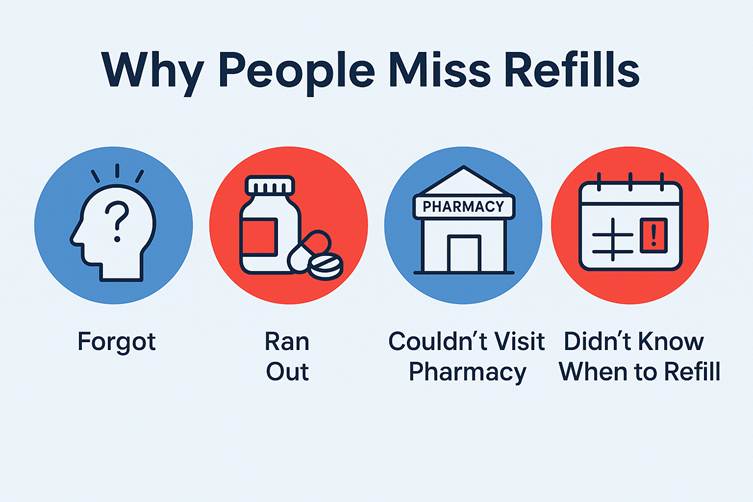
Why Do People Miss Refills?
Seniors face real challenges. Many are managing multiple health conditions, taking five, sometimes ten, pills a day. Tracking what’s running low becomes confusing. Some rely on their children or helpers to get the medicines, and delays happen. Others live alone, and a simple trip to the pharmacy feels exhausting.
Here are just a few everyday reasons:
Too many medicines, not enough reminders.
Busy caregivers who genuinely forget.
Mobility issues that delay pharmacy visits.
Lack of a system to track refill dates.
These are not rare situations. They’re common. And they’re exactly why mySeniorCareHubstepped in, with a feature designed to take that mental load off your plate.
mySeniorCareHub’s foundation is an understanding of what seniors and carers truly need peace of mind. The refill reminder feature serves as a silent, dependable assistant to make sure that prescriptions are never forgotten.
This is how it operates:
Smart Tracking: After adding a medication to the app, it records the dosage, frequency of use, and remaining pills.
Timely Alerts: Based on the intake pattern, the system sends reminders well in advance of when the medication will run out.
Caregiver Notifications: If a family member or caregiver is linked to the account, they also get notified. This shared responsibility reduces the chances of a missed refill.
mySeniorCareHub does the thinking for you, so you can focus on healing instead of worrying.
The app makes sure that your vitamin supplements and blood pressure medication are refilled on schedule, silently, automatically, and consistently.
Some medications are crucial for maintaining health and preventing serious complications. For elderly patients, missing even a single dose can lead to dangerous outcomes due to age-related vulnerabilities and multiple health conditions.
Here are some examples:
Blood pressure medications (such as Amlodipine or Telmisartan): Missing a dose may cause blood pressure to rise suddenly, increasing the risk of stroke, heart attack, or organ damage.
Diabetes medications (such as Metformin or Insulin): Skipped doses can lead to dangerously high or low blood sugar levels, both of which may require emergency medical care.
Blood thinners (such as Warfarin or Clopidogrel): Help prevent blood clots. If missed, the risk of stroke or clot-related complications can rise significantly, especially in those with heart conditions.
Anti-seizure medications (such as Levetiracetam): For people with epilepsy, even one missed dose may trigger a seizure.
Thyroid medications (such as Levothyroxine): Missing doses can disrupt hormone balance and lead to symptoms like fatigue, mood changes, and weight gain.
Heart failure medications (such as Digoxin or Diuretics): These helps manage symptoms like fluid retention and irregular heartbeat. Missed doses may cause breathing difficulty, swelling, or a worsening of heart function.
Medication adherence means taking the right medicine at the right time, in the right dose, without missing a single day. However, this isn’t always simple in the real world, particularly for elderly people who are managing several prescriptions, memory problems, and hectic caretakers.
Refill reminders play a critical role in improving adherence. They create a reliable routine, gently prompting patients or caregivers to act before it’s too late. When medications are taken consistently, the benefits are clear:
Blood pressure stays under control.
Blood sugar levels become more stable.
There is less chance of a heart attack or stroke.
Emergency hospital visits become less frequent.
Overall quality of life improves.
Several studies have shown that automated reminders can significantly increase medication adherence, particularly in older adults and those managing chronic diseases. Digital interventions, such as those found in mySeniorCareHub, aid in bridging the gap between daily behaviour and recommended care.
It’s about taking charge of your health, not just about taking medication. This journey is supported by mySeniorCareHub, which uses technology that feels personal rather than clinical.
In healthcare, the smallest gaps often lead to the biggest consequences. A missed refill can mean a missed dose, and for many seniors, that is the difference between stability and a setback. Medication adherence is not just a personal responsibility; it is a healthcare priority. Refill reminders are one of the simplest and most effective tools available to support it.
Take the case of Linda, a 68-year-old from Ohio living with atrial fibrillation. After forgetting to refill her blood thinner medication, she suffered a mild stroke that could have been prevented. Since then, Linda has been using a digital reminder system. With consistent refills and doses, her condition is now under control, and she has not missed a single medication in over a year.
Stories like Linda’s are not rare, but they can be rewritten. Our goal with mySeniorCareHub’s intelligent refill reminders is to protect what is important, prevent what can be prevented, and provide peace of mind to every family.
Since healthy habits are the foundation of good health, it’s never too late to get back on track.