Yes apps like mySeniorCareHub offer geofencing features that notify you immediately if your elderly parent steps out of a defined safe area.
Caring from a Distance, Without Intrusion
If your aging parent lives alone or is dealing with memory loss, every moment of silence can trigger anxiety. Missed calls, delayed walks, and unannounced outings aren’t always emergencies but they feel like they could be.
You don’t want to invade their independence. But you do want a way to be alerted if something’s off. That’s where geofencing steps in—a smart, respectful solution offered by mySeniorCareHub’s Location Tracking App.
What Is Geofencing and How Does It Work?
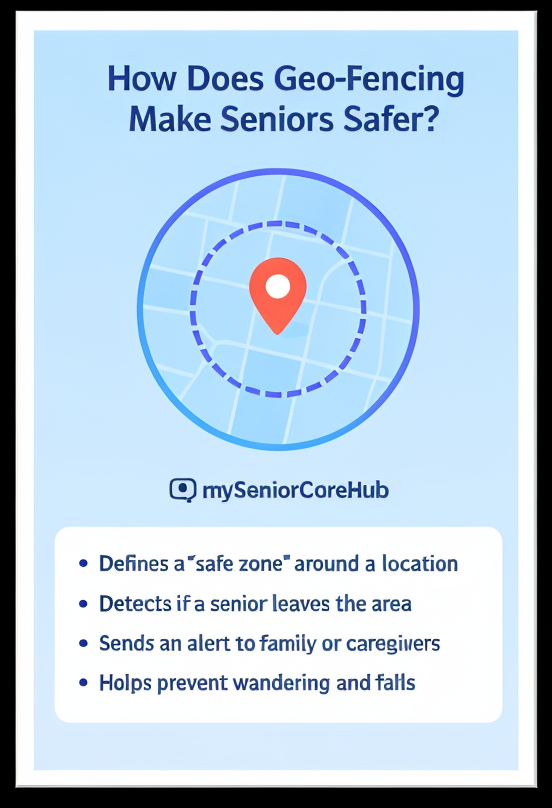
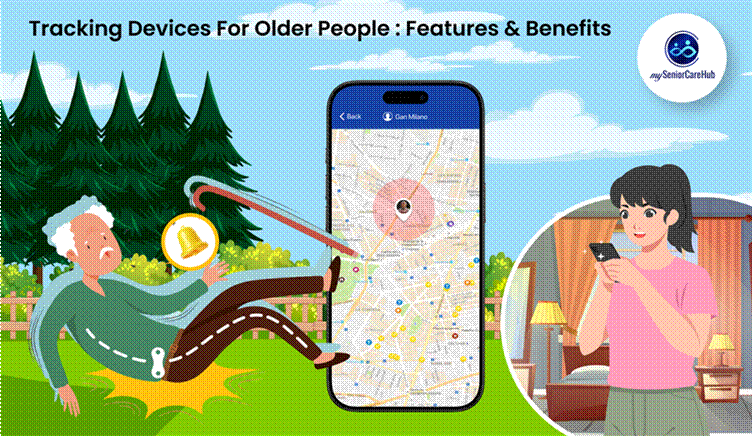
Geofencing allows you to set up virtual boundaries also called “safe zones” around familiar areas like home, local parks, temples, or the grocery store. Once set, the app will instantly notify you if your parent crosses those boundaries.
Why mySeniorCareHub Is the Best Geofencing App for Seniors
Unlike generic tracking apps, mySeniorCareHub is designed for senior care. It offers safety features with a human touch balancing independence with support.
Create multiple geofences based on your parent’s daily routine,not just fixed circles on a map.
🔔 Intelligent Alerts
Get notified only when it matters. Avoid false alarms and unnecessary panic.
📍 Real-Time Path Tracking
See your parent’s current route in real time—without having to call or text repeatedly.
🚨 Integrated Fall Alerts
If a fall occurs outside the safe zone, the app sends both a fall alert and exact GPS location instantly.
📱 No Wearables Needed
No smartwatch or extra device required—just a smartphone and a simple setup.
Learns Their Routine Over Time
As your parent continues to use the app, mySeniorCareHub adapts to their habits. It recognizes patterns like your mother’s evening temple visits or your father’s morning walks and reduces unnecessary alerts while keeping you informed of unusual activity.
You’re Not Monitoring, You’re Caring
Installing the mySeniorCareHub Location Tracking App isn’t about surveillance. It’s about building a silent safety net one that empowers you to act when it truly matters, and empowers your parent to live freely.
Because real caregiving isn’t about watching every move, it’s about being there right when you’re needed. And with mySeniorCareHub, you always will be.
It was 2:07 AM. The notification on the screen read: “High temperature detected — 101.8°F. Last check-in: missed.”
It was from mySeniorCareHub. I sat up instantly. My mom, recovering from a minor surgery, was sleeping in the next room. Or I hoped that she was.
When I rushed to check on her, I found her flushed and slightly shivering but fast asleep. She had no idea her temperature had risen. No grievances. No help calls. It was “just a little warm,” in her opinion. However, I was aware.
I made an instant call to our family physician. He asked me to monitor her vitals and bring her in if the fever rose further. Thanks to the early alert, we started treatment that same morning. The doctor later told me, “If you had waited even 6-8 more hours, this could’ve developed into a serious post-op infection.”
Why This Happens More Often Than We Think
Elderly individuals, particularly after surgery or with weakened immune systems, often fail to recognize the warning signs of infection. They may not want to “bother anyone”, or they may genuinely believe it’s nothing.
But for their bodies, a simple fever isn’t always simple.
A low-grade fever can be the first sign of an infection.
Delayed action can lead to hospitalisation, sepsis, or worse.
Seniors may miss symptoms because of reduced sensitivity, fatigue, or even confusion.
And it’s worse at night. Everyone has gone to sleep. Nobody is checking. mySeniorCareHub intervenes at that point in a subtle yet effective manner.
That night, the app didn’t just send a random alert. It did three critical things:
Feature
What It Did
Why It Mattered
Vitals Monitoring
Tracked temperature in real-time
Detected the early rise in fever
Check-in Alert
Notified that no check-in was done at bedtime
Signalled something was off
Caregiver Notification
Instantly sent an alert to my phone
Enabled quick response
We might have learnt too late in the morning if none of this had occurred.
The Medical Side You Shouldn’t Ignore – Check Your Vitals Regularly.
Here’s what caregivers need to know:
Post-surgery fevers can signal infection, inflammation, or complications like blood clots.
Immunocompromised seniors may not show symptoms until the situation escalates.
Elderly fever can exacerbate other conditions, such as kidney stress, heart issues, or dementia patients’ confusion.
But we often miss the signs. Why?
They’d rather not “make a fuss.”
They think it will pass.
They neglect to take readings or check in.
The Role of Tech in Gentle, Real Care – Vital Monitoring
mySeniorCareHub isn’t just about tracking—it’s about listening for silent alarms.
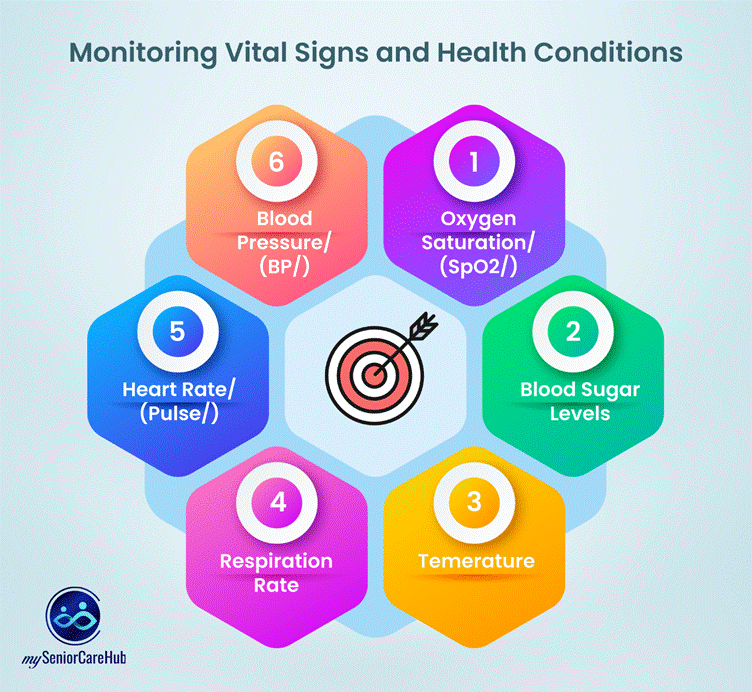
It monitors temperature, oxygen levels, and pulse.
It alerts when check-ins are missed.
It offers a Wellness Score, showing overall health at a glance.
And it notifies caregivers, even if they’re far away.
It’s not a replacement for care—it’s a reinforcement of it. A quiet safety net when your loved one is too tired, too weak, or too silent to say they need help.
Final Thought
That night, I didn’t hear my mom call for help. But I heard the alert. And it made all the difference.
We often think care means being physically present 24/7. But sometimes, care means setting up systems that speak up when our loved ones can’t.
If you have a senior at home especially one recovering or with low immunity—set up smart monitoring today. You may not need it every night. But the one night you do, it could save a life.
The Silent Crisis in Senior Living – Slip & Accidentals Falls
Do you know – Caregivers can get alert when someone gets fall. Best Fall Detection App has the ability to detect emergency.
Imagine this: An elderly woman living alone slips in her bathroom. She can’t move, can’t call out, and no one checks on her for hours. This scenario isn’t rare it happens every day in homes, assisted living facilities, and even hospitals.
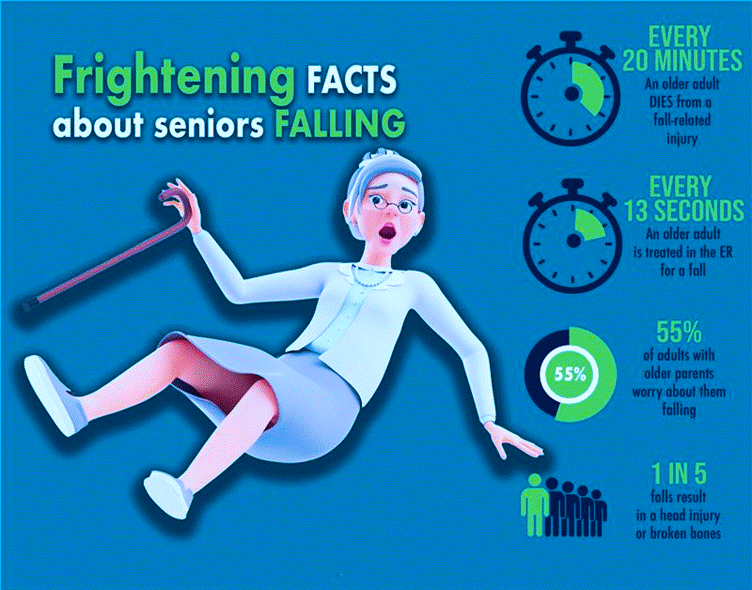
Falls are one of the leading causes of injury and death among the elderly, and what’s worse is when help doesn’t arrive on time. Seniors often live alone or with caregivers who cannot be present 24/7. In such instances, automatic fall detection systems can be lifesavers.
The Gravity of the Problem: Falls Among the Elderly
According to the World Health Organization:
Statistic
Details
1 in 3 adults over 65
Experiences at least one fall per year
1 in 5 falls
Causes a serious injury (fracture, head trauma)
40% of nursing home admissions
Are due to fall-related injuries
Bathroom
One of the most common fall zones is due to wet floors and low visibility
Medical Complications Due to Delayed Helpin Accidental Fall
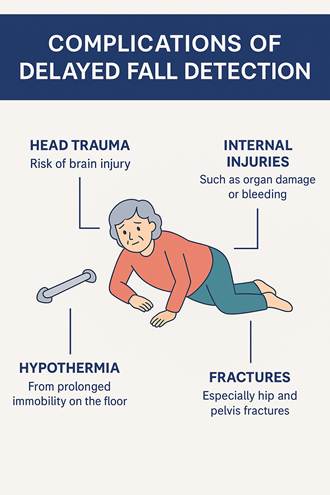
When a senior falls and isn’t discovered quickly, the health risks multiply. Immediate intervention can often prevent long-term damage.
Common injuries and complications due to delayed fall detection:
Injury
Risk if Help Is Delayed
Head Trauma
Increased intracranial pressure, risk of coma or death
Hip/Spine Fracture
Loss of mobility, surgery complications
Hypothermia
It is common and can be lethal to lie on a cold floor for hours.
Internal Bleeding
can be overlooked, particularly in elderly people with delicate vessels.
Pressure Sores
result from spending too much time immobile.
Muscle Breakdown (Rhabdomyolysis)
Can lead to kidney failure
Seniors may withdraw, avoid walking, and lose confidence as a result of their fear of falling again, even if the fall was not severe. This can hasten their physical decline.
Why Traditional Monitoring Isn’t Enough – FallDetection
Even with CCTV cameras, routine caregiver check-ins, or emergency alarms:
Elderly people may lose consciousness after a fall and can’t press an alert button.
Night-time falls may go unnoticed for hours.
Privacy concerns make constant surveillance uncomfortable.
That’s where smart fall detection comes in—offering a non-intrusive, real-time, and automated safety net.
Case Example: Mrs Sharma, a 78-year-old living in Delhi, fell in her bathroom at 3 AM. Her smart watch from mySeniorCareHub detected the fall and alerted her daughter instantly. Within 10 minutes, help arrived. Doctors later said a delay of even an hour could have worsened the internal bleeding.
Encourage your loved ones to wear the device regularly, especially at night or in the bathroom.
Do fall-proofing at home: install grab bars, anti-slip mats, and night lights.
Use data from fall alerts to understand fall patterns and take preventive action.
Don’t make it about surveillance—make it about freedom and safety.
Let’s Not Wait for a Tragedy
Fall detection isn’t about fearing the worst—it’s about preparing for it smartly. In elderly care, minutes matter. Having a system that recognizes a fall, alerts help instantly, and tracks health parameters can truly change outcomes.
At mySeniorCareHub, we’re committed to bringing technology that cares—blending safety with dignity.
It was an ordinary afternoon until we realised Grandpa wasn’t in the house. We searched every room, checked the backyard, and called his name throughout the neighbourhood.
Hours passed, and panic set in. By the time a stranger found him sitting alone at a bus stop miles away, confused and dehydrated, the emotional toll on our family was immense. This moment, both terrifying and unforgettable, is the reality for many families caring for seniors with Alzheimer’s or Parkinson’s.
But what if there had been a way to know when he stepped out? What if one alert had been sufficient? This article explores how to recognize the early signs of Alzheimer’s, the dangers of wandering, and how geo-fencing and real-time location tracking can be lifesaving tools for families.
Understanding Alzheimer’s Disease and Wandering Behavior
Alzheimer’s is a progressive neurodegenerative disorder that affects memory, cognition, and behaviour. One of the most dangerous symptoms as the disease progresses is wandering, which affects over 60% of individuals with dementia.
Early Signs of Alzheimer’s Disease
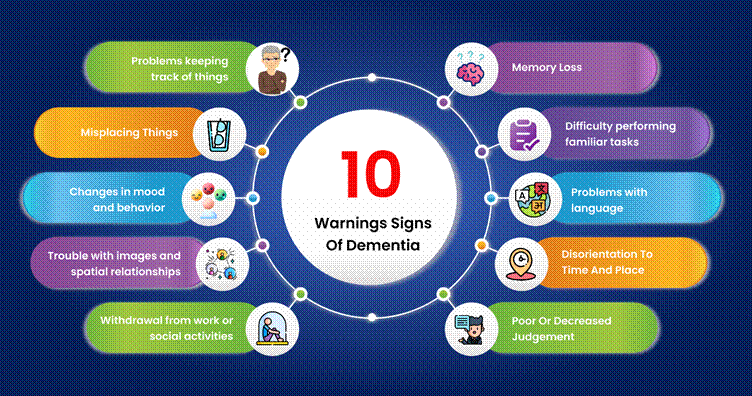
Symptom
Description
Memory loss
Forgetting recent events, names, or appointments repeatedly
Disorientation
Getting lost in familiar places or confused about time
Poor judgment
Making unsafe decisions, like dressing inappropriately for the weather
Mood changes
Sudden shifts in mood or personality, often appearing confused or anxious
Withdrawal
Avoiding social activities or work they once enjoyed
Recognizing these signs early can help families prepare for the risks, including the high probability of wandering behavior.
Why Do Seniors Wander?
Confusion about time or place
Looking for something or someone from the past
Restlessness or boredom
Stress in unfamiliar settings
Wandering is not just inconvenient—it’s dangerous. Seniors can become lost, dehydrated, or injured. Weather exposure, traffic hazards, and the risk of falling make this a critical issue.
Geo-fencing utilizes GPS or cellular data to establish virtual boundaries (“safe zones”) around a physical location. If the monitored person leaves that boundary, an instantalert is sent to caregivers via a mobile app or text.
How Geo-Fencing Helps
Feature
Benefit
Custom Safe Zones
Set areas like home, backyard, or familiar parks
Real-Time Alerts
Get notified immediately when the senior steps out
Location Tracking
Pinpoint the exact GPS location for faster retrieval
Activity History
See movement patterns that may indicate increased risk
Emergency Button
Some devices allow the senior to send alerts themselves
When integrated with wearable tech like GPS-enabled watches or smartphone apps, geo-fencing offers an invisible layer of safety.
In the U.S., more than 11 million people provide unpaid care for individuals with Alzheimer’s. The emotional and physical toll is overwhelming. Technology like geo-fencing can ease that burden.
Case Example:
Linda, a caregiver for her 78-year-old mother, received a geo-fence alert one morning while at work. Her mother had opened the front gate and started walking. Within minutes, Linda was able to guide a neighbor to her location using live GPS, preventing what could have been a tragic outcome.
With features like geofencing and location tracking, the mySeniorCareHub app offers the most user-friendly interface. The best part of this app is that it’s free for users.
It’s Time to Use Location Tracking
Even if your loved one hasn’t wandered yet, certain signs suggest it’s time to consider geo-fencing:
They get confused in familiar surroundings
They’ve left the house without informing anyone
You find them awake or active at odd hours
They ask about going “home” when they’re already home
They’ve had one or more near-miss incidents
Proactively using location tracking can prevent a tragedy rather than reacting to one.
Addressing Privacy and Dignity
One concern caregivers often express is, ‘Will tracking invade their dignity?’
Here’s how to approach it:
Frame it as protection, not surveillance
Choose discreet devices that feel less intrusive
Explain the reasoning behind it compassionately
Most seniors, especially those in early stages, are willing to agree when they understand it keeps them safe.
The hours we lost Grandma were filled with fear, guilt, and helplessness. Had we known about geofencing and tracking, it could have ended differently.
Technology won’t stop Alzheimer’s. But it can give families the tools to respond faster, safer, and with more peace of mind. If your loved one is showing early signs, or even if they aren’t, don’t wait for the moment they walk out unnoticed.
Set a digital safety net. One alert could make all the difference.
Imagine this: your mother, living alone, collapses from a stroke. She can’t reach her phone, and no one is around. The clock starts ticking. In cases like this, every minute without medical alert increases the risk of permanent brain damage or death. It’s a chilling scenario, but sadly not uncommon among elderly individuals. As families juggle work, caregiving, and long-distance living, this question becomes frighteningly real. This article examines howemergency alerts and real-time location tracking via mySeniorCareHuband similar platforms can help close the gap between immediate care and isolation.
Stroke, cardiac arrest, and diabetic complications are leading causes of morbidity in the elderly. What makes them life-threatening is how fast they escalate.
Medical Event
Critical Time Window
Outcome of Delayed Help
Stroke
Within 60 minutes (Golden Hour)
Increased risk of paralysis, cognitive decline
Cardiac Arrest
Within 4-6 minutes
Permanent brain damage, death
Diabetic Hypoglycaemia
Within 15-30 minutes
Seizures, unconsciousness, coma
These emergencies don’t wait. Yet most elderly individuals, especially those living alone, are unprepared to signal for help quickly.
Barriers Faced by Families and Seniors Even attentive families face limitations:
Elderly loved ones may be reluctant to call for help.
Phones may not be reachable during an emergency.
Caregivers can’t always be present.
Many seniors downplay early symptoms, losing precious time.
These challenges call for an intelligent system that doesn’t rely solely on the patient raising an alarm.
With modern digital health tools, we no longer rely entirely on verbal communication during a crisis. Here’s how location-enabled platforms like mySeniorCareHub provide an active safety net:
Mrs. Meena, 74, lives in Chandigarh. One afternoon, she experiences slurred speech and collapses. Her mySeniorCareHub device detects a fall and triggers an emergency alert. Her son receives a push notification with a live GPS link. Within 3 minutes, the system contacts the local ambulance service with her coordinates. Medical help arrives in under 12 minutes. Doctors later confirmed she was treated well within the golden hour.
It’s the power of proactive care.
Medical Perspective: Why It Works
Neurological Events (e.g., Stroke): Early thrombolytic therapy within 3 hours drastically improves outcomes. Real-time alerts accelerate this timeline.
Diabetic Emergencies: Immediate response can prevent coma and hospitalisation.
Cardiac Arrest: CPR or defibrillation within the first 6 minutes significantly increases survival rates.
With location tracking, these interventions are no longer delayed due to logistical confusion or unreachable phones.
Emotional and Practical Reassurance for Families The emotional toll of caregiving can be heavy. Constant worry, guilt, and fear of missing an emergency moment can drain families. Real-time tracking provides:
Peace of Mind: You’re always informed, no matter where you are.
Autonomy for Elders: Seniors retain independence while staying safe.
Faster Emergency Response: Coordinated care teams can act without waiting for human-initiated calls.
Conclusion A stroke, a fall, or a diabetic episode doesn’t have to end in tragedy. Technology today gives us tools that didn’t exist a decade ago. With mySeniorCareHub’s real-time tracking and emergency alert system, you’re never truly far from your loved one’s side. It transforms helplessness into readiness.
In moments where every second counts, knowing where your parent is—and that help is already on the way—is more than peace of mind. It’s lifesaving.
Explore the emergency features and real-time monitoring tools of mySeniorCareHub. Because when your loved one is in danger, you deserve to know—and act—in real time.
As our loved one’s age, their safety becomes an increasing concern. The transition from being caregivers to requiring care often brings a blend of emotions: pride, anxiety, and an overwhelming sense of responsibility. Maintaining your elderly parent’s well-being while honoring their independence is a delicate balancing act, whether they are living alone or a grandparent is suffering from memory loss.
This is where a GPS Tracker for Seniors transforms from a piece of technology to a tool of empowerment, a safety net, and a way to stay connected without hovering. GPS tracking with apps like mySeniorCareHub is about more than just finding out where they are; it’s about making sure they’re safe.
With the increase in life expectancy and a growing elderly population, age-related health challenges are also rising. Cognitive impairments like dementia and Alzheimer’s, mobility issues, and chronic health conditions like hypertension or diabetes put seniors at greater risk when they’re alone.
According to the Alzheimer’s Association, 6 in 10 people with dementia will wander at least once, often into dangerous situations. Many of them may not remember their name, address, or how to get back home. The average search time to find a missing elderly person ranges from hours to days. Those critical hours can make the difference between safety and serious harm.
And the risks are not limited to those with dementia:
Seniors with arthritis or joint issues might fall during routine walks.
Vision problems can lead to disorientation, even in familiar areas.
Diabetics or cardiac patients may collapse unexpectedly in public.
In all these scenarios, a GPS tracker for elderly individuals can be a life-saving tool.
mySeniorCareHub’s GPS Location Tracking is a app available for Android & iOS feature that uses Global Positioning System technology to determine an individual’s real-time location. But a GPS tracker app designed for seniors is a holistic solution that takes into account age-related needs:
Easy-to-use interface for seniors with low tech literacy
Real-time location sharing with caregivers or family members
Emergency alerts when the senior is in distress
Safe zone settings (geofencing) with notifications when they step outside defined areas.
In an approachable, considerate, and medically relevant manner, mySeniorCareHub integrates all of these features.
Wandering is one of the most dangerous symptoms of Alzheimer’s and other forms of dementia. It can happen without warning, even in the early stages. mySeniorCareHub allows caregivers to set up geofencing zones. If the senior steps outside their designated “safe” area, the app immediately notifies family members and even emergency services, depending on the plan.
2. Cardiac or Diabetic Emergencies
Suppose a senior with a heart condition is outdoors and experiences symptoms like dizziness or chest pain. With the mySeniorCareHub SOS button, they can send an alert along with their real-time GPS location to caregivers and emergency responders. Time is critical in such medical events, and GPS location can shave off precious minutes.
3. Behavioural Monitoring
Sudden changes in daily movement patterns—like staying in one place for too long or straying far from familiar routes—can signal new health issues, depression, or disorientation.GPS tracking combined with health analytics helps families recognize red flags early.
While there are numerous GPS tracking solutions available, most are generic. mySeniorCareHub is specifically designed for seniors, developed in collaboration with healthcare professionals, and tailored for medical relevance and ease of use.
You’ll always know the whereabouts of your loved one, whether they’re out for a walk, at a doctor’s appointment, or visiting a neighbour. This minimises the need for constant phone calls and reduces anxiety.
Establish virtual boundaries such as “Home”, “Park”, or “Market”. If your loved one crosses the boundary (intentionally or unintentionally), you’ll be notified instantly. This feature is especially vital for dementia care.
Your loved one will receive gentle reminders to take medications and attend health checkups. If the app detects they’re not at the clinic location during an appointment, the caregiver gets notified.
A common concern about location tracking is privacy. Nobody likes to feel “watched.” mySeniorCareHub addresses this by incorporating transparency and consent into its system.
Seniors can view who is tracking them
Temporarily pause location sharing if they choose
Built-in reminders of when and why tracking is enabled
Voice explanations of features to empower tech-averse users
Respecting autonomy while ensuring safety is at the heart of mySeniorCareHub’s philosophy.
Families today are often separated by distance. Whether you’re in another city or working full-time, mySeniorCareHub’s Family Tracking App bridges the gap by ensuring you’re only a click away from knowing your loved one is okay.
And for families with multiple caregivers (siblings, attendants, etc.), the app allows multi-user access, ensuring coordination without miscommunication.
Data Privacy & Medical Accuracy
All location and health data is encrypted.
Only verified family members or healthcare professionals can access sensitive information.
GPS and health analytics are synced with clinician dashboards (if enabled), making it easier to make informed medical decisions
Real Stories, Real Impact
“We used to worry constantly when Dad went for walks. Once, he didn’t return for two hours because he lost his way. Now, with mySeniorCareHub, we get alerts if he moves out of the neighbourhood—and he feels more confident too.” — mySeniorCareHub user
“My mother has mild dementia, and last week she wandered out at 6 am. We were able to locate her quickly thanks to the GPS alert. I can’t imagine managing her care without this app.” — mySeniorCareHub user
It’s Not Just About Location; It’s About Living Safely and Independently
Investing in a GPS Tracker for Seniors & Elderly Loved Ones through mySeniorCareHub is not just a smart choice—it’s a compassionate one. It helps seniors retain independence, reassures caregivers, and enables fast action during critical moments.
In a world where one wrong turn could be life-threatening, mySeniorCareHub ensures your loved ones are never truly alone, even when you’re not by their side.